
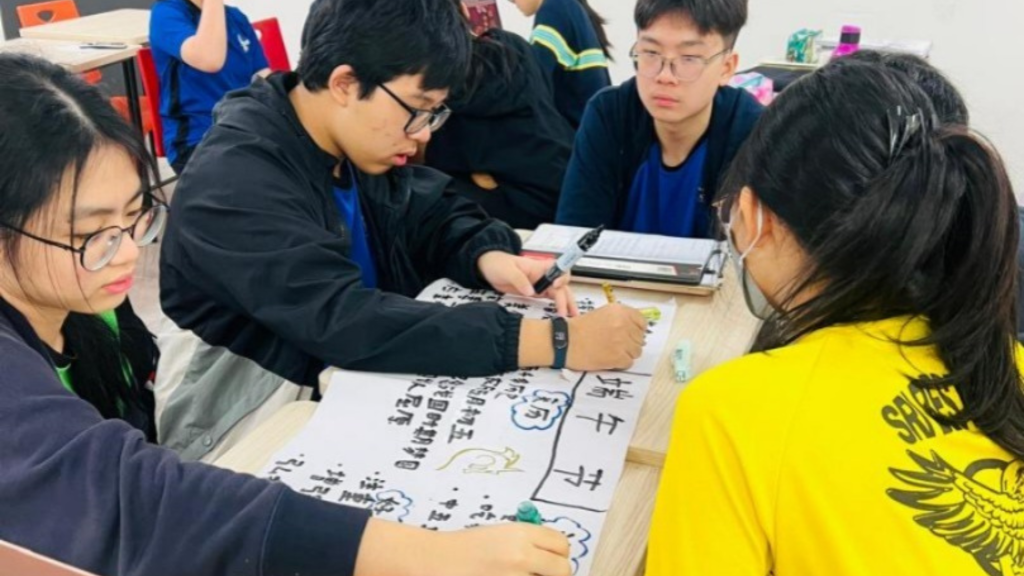
Most parents visiting an international school for the first time expect to hear about English, Cambridge, and university pathways. What surprises many at SBIS is finding out that Mandarin is not optional — it is a compulsory subject at every level, from Early Years through to Secondary.
That decision was not made lightly, and it was not made to follow a trend. This article explains the reasoning, what it looks like in practice, and why families who initially had reservations about it often come to regard it as one of the most valuable parts of the SBIS experience.
Why Mandarin, and Why Now?
Mandarin Chinese is the most spoken language in the world by native speakers, and the second most used language in global business. China’s position in the global economy has shifted fundamentally over the past two decades: it is now the world’s largest trading nation by goods, the primary bilateral trade partner for most countries in Southeast Asia, and a central force in the technology, manufacturing, and infrastructure sectors that will shape the next generation of employment.
For students in Malaysia particularly, the case is even clearer. Chinese-speaking business networks are deeply embedded in the Malaysian commercial landscape. A graduate who can operate confidently in Mandarin — not just conversationally, but in professional and academic contexts — enters the workforce with an advantage that their peers without that competency simply do not have.
The question SBIS asked when designing its curriculum was not “should we offer Mandarin?” but “is there any good reason not to make it compulsory?” The answer was no.
How Mandarin Is Taught at SBIS
Mandarin is integrated across all year groups at SBIS, with structured levelling that ensures every student is challenged appropriately regardless of their starting point.
From Year 2 onwards, students are assessed and placed into Beginner, Intermediate, or Advanced Mandarin classes. This means a student who arrives with no prior Mandarin exposure is not placed in the same group as a heritage speaker — they follow a structured progression that builds confidence and competency from the ground up. A student with strong prior Mandarin is pushed further, not held back to match the pace of beginners.
The curriculum builds toward the HSK — the Hanyu Shuiping Kaoshi, the internationally recognised Chinese Language Proficiency Examination administered by Hanban (part of the Chinese Ministry of Education). SBIS is an HSK testing centre. In 2023, four SBIS students earned the Top in the World Outstanding Cambridge Learner Award in Mandarin Chinese — a result that speaks directly to the quality of instruction, not just the compulsory nature of the subject.
What “Compulsory” Actually Means for Your Child
The word “compulsory” sometimes triggers concern among parents, especially those whose children have had no prior Mandarin exposure. The concern is understandable: will a child who starts from zero be overwhelmed? Will it take time away from English or core academic subjects?
The honest answer is that any new language requires effort, particularly in the early stages. Mandarin’s character-based writing system is genuinely different from alphabetic languages, and it takes time to build fluency. SBIS does not pretend otherwise.
What the school’s experience consistently shows, however, is that children acquire languages far more readily than adults do — and that the challenge of Mandarin, met with good teaching and proper levelling, builds skills that extend well beyond language competency: pattern recognition, memory, discipline, and the confidence that comes from mastering something genuinely difficult.
By the time an SBIS student completes their secondary education, they carry certifiable Mandarin proficiency — not a vague claim that they “studied some Mandarin,” but an internationally recognised credential that can be stated on a university application or a CV.
The Bigger Picture: Multilingualism as a Competitive Advantage
SBIS students graduate with demonstrable proficiency in three languages: English (the medium of instruction across the Cambridge curriculum), Bahasa Malaysia (a core subject at all levels, with IGCSE Bahasa Malaysia as the qualifying examination), and Mandarin Chinese (compulsory from Early Years, assessed through HSK and Cambridge IGCSE Mandarin Chinese).
That is a genuinely unusual combination in the international school market, and it reflects a deliberate choice about what kind of graduates SBIS is trying to produce: students who are internationally mobile, regionally connected, and practically prepared for a professional environment in which Mandarin is not exotic, but expected.
For a broader view of the SBIS curriculum structure and how Mandarin sits within it, visit the curriculum pages for
Early Years, Primary, and Secondary. For the full context of how Mandarin sits alongside our other signature programmes, see the SBIS Signature Programmes page.
Pro Tip: When comparing international schools in KL, ask specifically whether Mandarin is compulsory or elective — and if elective, what percentage of students actually take it through to secondary. A subject that is offered but rarely chosen tells you something important about how seriously a school takes it.